
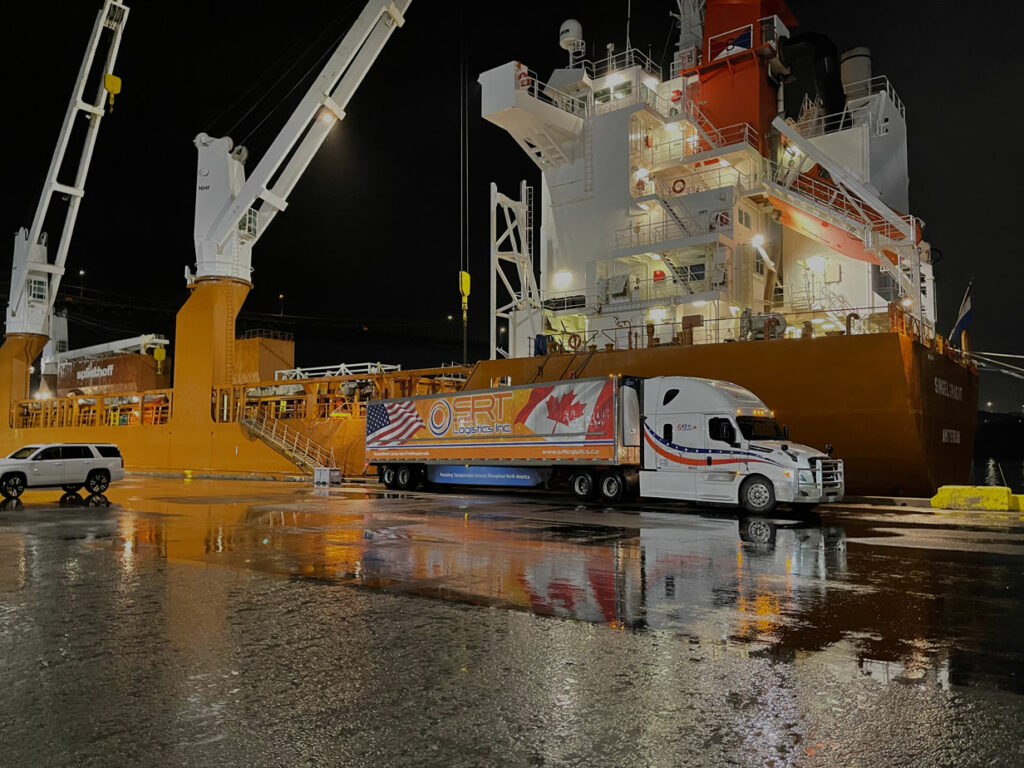
Are you paying for a full truck when you only need half the space? You’re not alone and it’s costing your business more than it should. Less than truckload services offer a smarter, more cost-effective way to ship freight across Canada and beyond.
In this guide, SRT Logistics Inc breaks down exactly what LTL shipping is, how it works, and how to know if it’s the right solution for your business.
Table of Contents
- What Is Less Than Truckload Shipping?
- How Does LTL Transportation Work?
- What Are the Benefits of LTL Freight Services?
- When Should Your Business Use LTL vs. FTL?
- How Is LTL Freight Pricing Calculated?
- What to Look for in an LTL Freight Carrier?
- LTL Shipping for Canadian Businesses: What You Need to Know
- FAQ
- Conclusion
What Is Less Than Truckload Shipping?
Less than truckload (LTL) shipping is a freight method where your cargo shares trailer space with shipments from other businesses. Instead of booking an entire truck, you pay only for the space your goods actually use.
This makes LTL an ideal solution for businesses that regularly ship loads between 150 lbs and 15,000 lbs too heavy for parcel carriers like UPS or FedEx, but too small to justify a full truckload.
LTL freight carriers consolidate shipments from multiple shippers into one trailer, then route each load to its destination. It’s an efficient, scalable shipping model that’s especially popular with small and medium-sized businesses across Canada.
How Does LTL Transportation Work?
LTL transportation follows a hub-and-spoke model. Here’s a simple breakdown of the process:
- Pickup: A carrier picks up your freight from your location.
- Origin Terminal: Your shipment arrives at the carrier’s local terminal, where it’s sorted and consolidated with other loads headed in the same direction.
- Line Haul: The consolidated trailer travels to a hub terminal closer to your shipment’s destination.
- Destination Terminal: The load is sorted again and transferred to a local delivery truck.
- Final Delivery: Your shipment is delivered to the recipient’s address.
Transit times for LTL freight shipping typically range from 1 to 5 business days within Canada, depending on distance and service level. Cross-border shipments to the U.S. may take longer due to customs clearance.
One thing to note: because LTL shipments pass through multiple terminals, they are more likely to be handled several times. Proper packaging and palletizing are critical to protecting your freight.
What Are the Benefits of LTL Freight Services?
LTL freight services offer several compelling advantages for businesses that don’t ship full truckloads regularly.
Cost Savings You only pay for the space you use. Sharing truck space with other shippers means the carrier’s costs are split proportionally, which translates to significantly lower rates than a full truckload option.
Flexibility LTL shipping accommodates a wide range of shipment sizes. Whether you’re sending one pallet or ten, an LTL freight carrier can handle it without requiring you to wait until you have a full load.
Freight Tracking Most LTL carriers provide real-time tracking so you and your customers know where a shipment is at all times. This visibility improves supply chain management.
When Should Your Business Use LTL vs. FTL?
The right choice between LTL and full truckload (FTL) shipping depends on the size, urgency, and nature of your shipment.
Choose LTL Transportation Services When:
- Your shipment weighs between 150 lbs and 15,000 lbs
- You’re shipping 1 to 10 pallets
- You don’t have time-sensitive delivery requirements
- You want to save money on smaller, regular shipments
- Your goods are well-packaged and can tolerate moderate handling
Choose FTL When:
- Your shipment fills more than half a trailer
- You need faster, direct-route delivery
- Your goods are fragile, high-value, or require special handling
- You have strict delivery time windows
However, it’s not always a black-and-white decision. Talking to an experienced logistics partner like SRT Logistics Inc can help you evaluate both options based on your specific shipment profile and budget.
How Is LTL Freight Pricing Calculated?
LTL freight pricing is more complex than parcel shipping. Several factors influence the final cost:
Weight Heavier shipments cost more. However, the relationship between weight and cost isn’t always linear carriers use weight breaks to determine rate thresholds.
Freight Class The National Motor Freight Classification (NMFC) system assigns every type of commodity a freight class from 50 to 500. Class is determined by:
- Density (weight per cubic foot)
- Stowability
- Handling requirements
- Liability
Lower freight classes (denser, easier to handle) cost less to ship. Higher classes (fragile, low-density, or hazardous items) cost more.
Dimensions and Density A large but lightweight shipment may be charged based on its dimensional weight rather than its actual weight. Carriers do this to account for the space a light but bulky load takes up in the trailer.
Distance and Lane Longer hauls cost more. Shipping between major cities on established carrier lanes is typically less expensive than shipping to rural or remote areas.
Accessorial Charges Extra services come with extra costs. Common accessorial fees include:
- Liftgate service
- Inside pickup or delivery
- Residential delivery surcharge
- Fuel surcharge
- Limited access surcharge
Always request a detailed quote that includes all potential accessorial charges before committing to a freight shipping service.
What to Look for in an LTL Freight Carrier?
Choosing the right LTL freight carrier can make a significant difference in your shipping experience. Here are the key factors to evaluate:
Network Coverage Does the carrier service the lanes you need? Make sure they cover your origin, destination, and any cross-border routes if you ship to the U.S.
Transit Times Check published transit time schedules. Reliable carriers are transparent about expected delivery windows.
Claims Ratio A low cargo damage rate (claims ratio) is a strong indicator of a carrier’s handling quality. Ask for this information upfront.
Technology Look for carriers with online tracking, electronic bill of lading (eBOL) capabilities, and easy-to-use quoting tools.
Customer Service When issues arise, you need a team that responds quickly and resolves problems efficiently. A freight partner with a dedicated support team is invaluable.
Pricing Transparency Hidden fees are a common frustration in freight shipping. Choose a carrier that provides clear, all-in quotes with no surprises at delivery.
At SRT Logistics Inc, we partner with trusted LTL freight carriers to offer reliable, cost-effective freight shipping services across Canada and the U.S.
LTL Shipping for Canadian Businesses: What You Need to Know
Canada’s geography presents unique logistics challenges. Shipping between provinces especially to remote or northern communities requires a carrier with a strong national network and the flexibility to handle regional complexity.
Cross-Border Considerations If your business ships between Canada and the U.S., your LTL freight must comply with customs documentation requirements. This includes the Canada Customs Invoice (CCI), commercial invoices, and the North American Free Trade Agreement (CUSMA) certificates if applicable.
Working with a freight partner experienced in cross-border LTL transportation services ensures your shipments clear customs without costly delays.
Provincial Regulations Different provinces have varying regulations around weight limits, axle configurations, and road restrictions especially during spring thaw season. A knowledgeable carrier accounts for these variables when routing your freight.
Currency and Billing Make sure you understand how your carrier handles currency conversion for cross-border shipments and whether quotes are in CAD or USD.
SRT Logistics Inc is based in Abbotsford, BC, and specializes in freight shipping services throughout British Columbia and across Canada. Contact our team for a customized LTL shipping quote tailored to your business needs.
Frequently Asked Questions
Conclusion
Less than truckload services give Canadian businesses a flexible, affordable way to ship freight without paying for empty trailer space. Whether you’re a wholesale distributor moving palletized inventory or a small business shipping product to customers across provinces, LTL transportation services offer the right balance of cost and reliability.
Ready to simplify your freight shipping and reduce costs? SRT Logistics Inc is here to help. 2677 Mount Lehman Rd, Abbotsford, BC V4X 2N2, Canada +16047554535 Get a free LTL freight quote today and discover how our less than truckload services can work for your business.





2 comments